
The Meaning of Vietnamese Calligraphy (Thư Pháp) and Why It Still Matters Today
Vietnamese calligraphy — Thư Pháp — is more than beautiful writing. It’s a language of blessings, ancestral wisdom, and the quiet stories our elders once told us without words. For many of us who grew up between cultures, Thư Pháp becomes a way to reconnect with roots we thought we lost. In this blog, I want to share what Vietnamese calligraphy truly means, why it has survived generations, and how it continues to shape my art practice today.
What Is Thư Pháp?
At its heart, Thư Pháp means “the method of writing,” but the translation barely scratches the surface.
In Vietnam, calligraphy is not just handwriting — it is a practice of tâm, the heart. Each stroke is meant to reflect the writer’s spirit, intention, breath, and inner stillness. A blessing written beautifully is believed to carry the energy of the word itself: peace, compassion, abundance, longevity, or love.
Thư Pháp transforms language into art and intention into something tangible.
It is both a prayer and a painting.
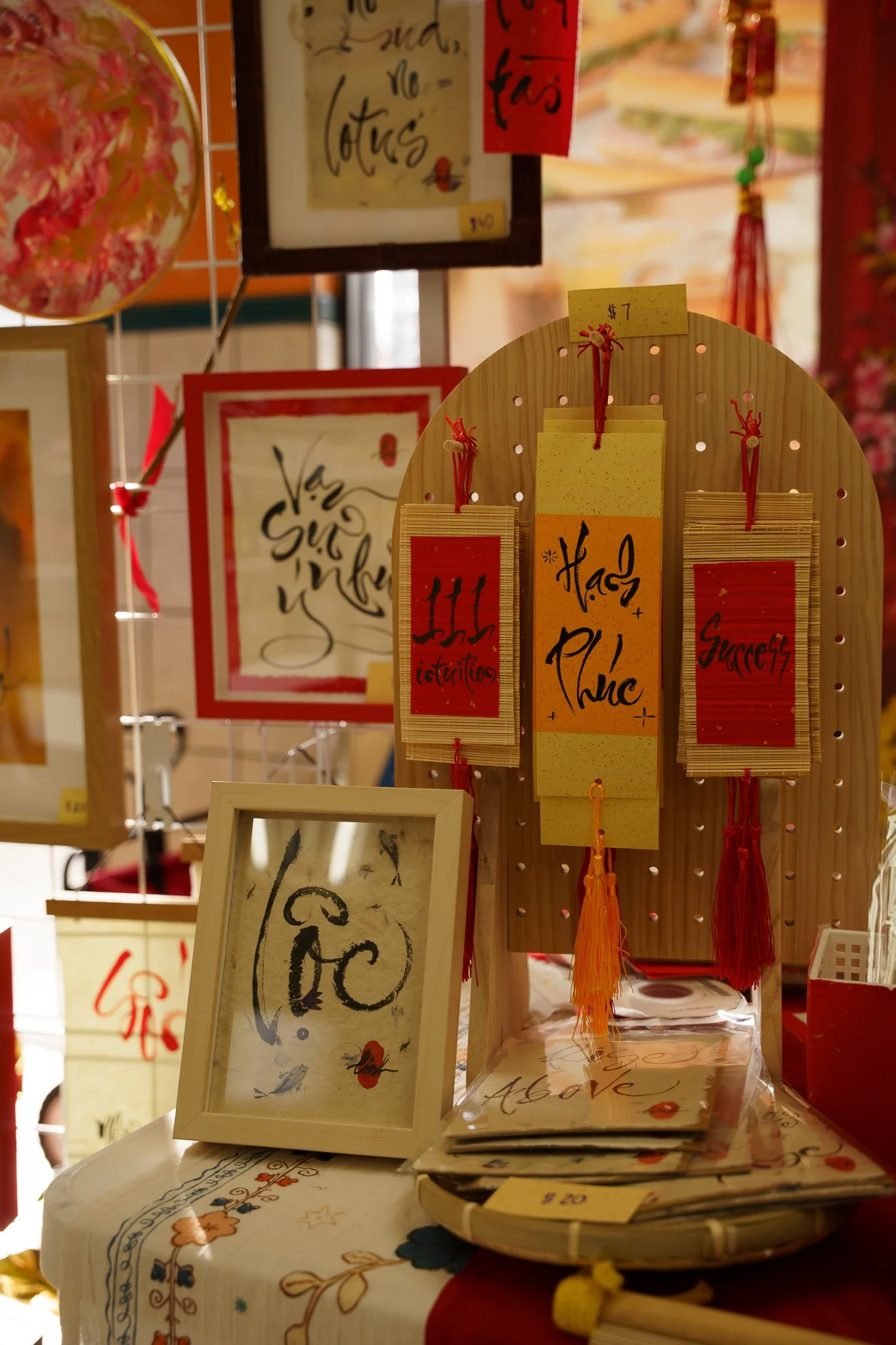
A Brief History: From China to Vietnam
Vietnamese calligraphy traces its origins to Chinese calligraphy, one of the oldest writing traditions in the world. For centuries, Vietnamese scholars (nhà nho) wrote classical Chinese characters (Hán Tự) using brush and ink.
Over time, as Vietnam developed its own Romanized writing system (chữ Quốc Ngữ), calligraphers adapted these strokes into new forms that blended old techniques with modern Vietnamese letters.
This evolution created something uniquely Vietnamese — a calligraphy style rooted in tradition yet flexible enough to grow with the times.
Why Calligraphy Is Central to Vietnamese Holidays Like Tết
If you’ve ever visited Vietnam during Tết (Lunar New Year), you’ve probably seen calligraphy everywhere — on red scrolls, temple gates, markets, homes, and altars.
Calligraphy during Tết is a practice of:
Inviting good fortune
Cleansing old energy
Welcoming blessings for the new year
Honoring ancestors
Strengthening family bonds
The color red symbolizes luck and new beginnings.
Gold symbolizes prosperity and abundance.
Together, they carry the wishes every family hopes for in the year to come.
During Tết, people traditionally visit calligraphy masters (ông đồ) to request a blessing word that will guide them through the year. This tradition is still alive today, both in Vietnam and in Vietnamese communities worldwide.
The Meaning Behind Common Calligraphy Words
Some of the most beloved calligraphy words carry deep cultural significance. Here are a few you may recognize:
Tâm — Heart, compassion, the moral compass that guides our actions
Bình An — Peace, safety, inner grounding
Phúc Lộc Thọ — Happiness, prosperity, and longevity (the three pillars of a good life)
An Khang Thịnh Vượng — Health and thriving abundance
These words are more than decoration — they are prayers made visible.
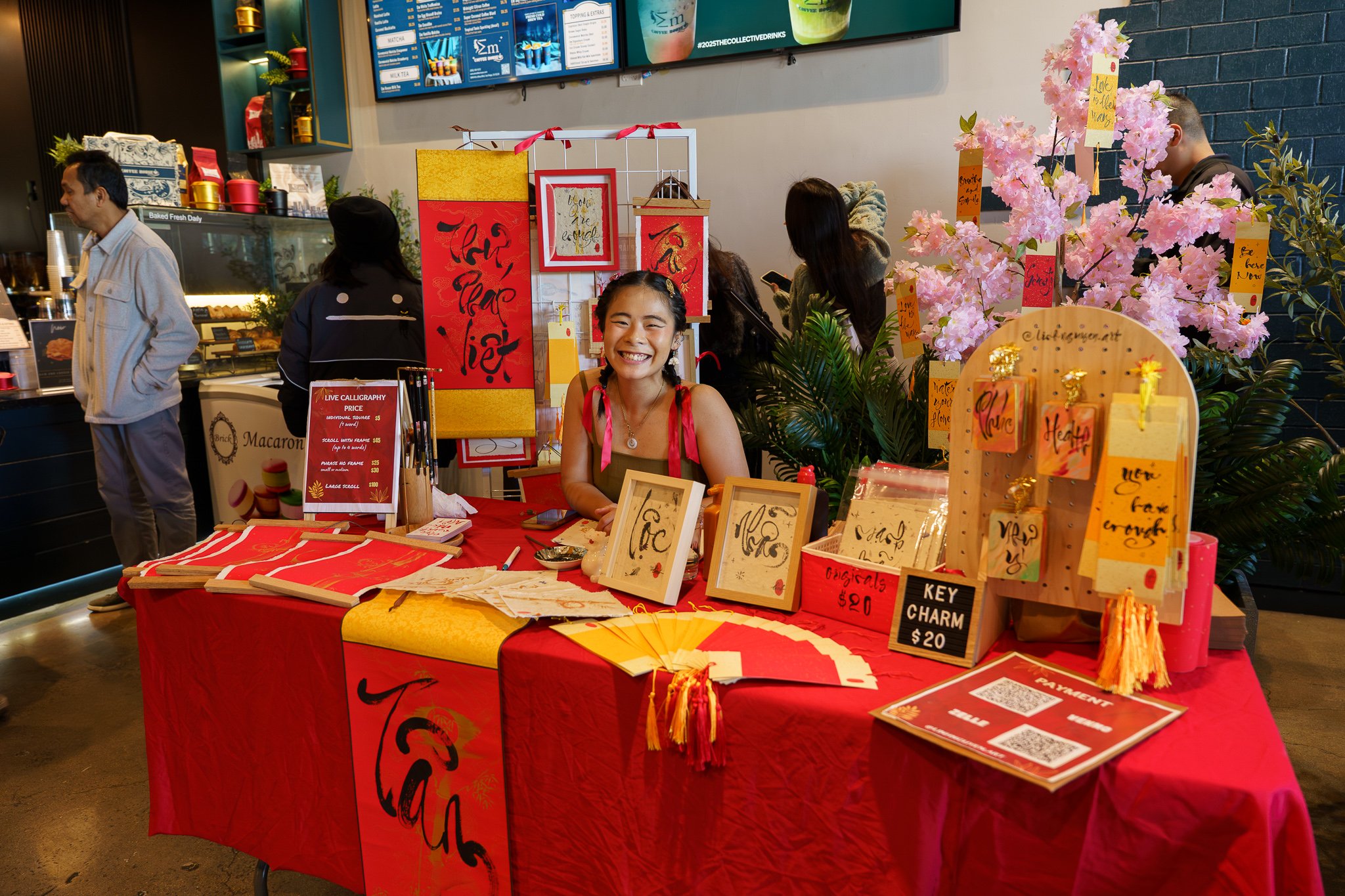
Live Vietnamese Calligraphy at Em Coffee in San Diego, CA
In 2025, I had a vision of bringing Vietnamese Calligraphy outside of festival and to small Vietnamese-owned businesses in San Diego area, and it was a wonderful experience.
My Personal Journey Learning Calligraphy in Đà Nẵng
Two years ago, I returned to Việt Nam hoping to reconnect with my family and my identity after years of working in the corporate world. I never expected that calligraphy would become the doorway back home.
Every morning in Đà Nẵng, I would sit in front of a blank sheet of rice paper — brush in hand, heart racing. My teacher told me:
“Chữ đẹp phải đi cùng tâm đẹp.”
Your writing must come from a beautiful heart.
That sentence changed everything.
Calligraphy taught me to slow down, to breathe, to reconnect with parts of myself I hadn’t touched in years. It gave me a way to speak to my ancestors, to understand my culture, and to share that love with my community here in the U.S.
Today, when I write blessings for others — at weddings, pop-ups, or custom commissions — I feel my teacher’s words guiding every stroke.
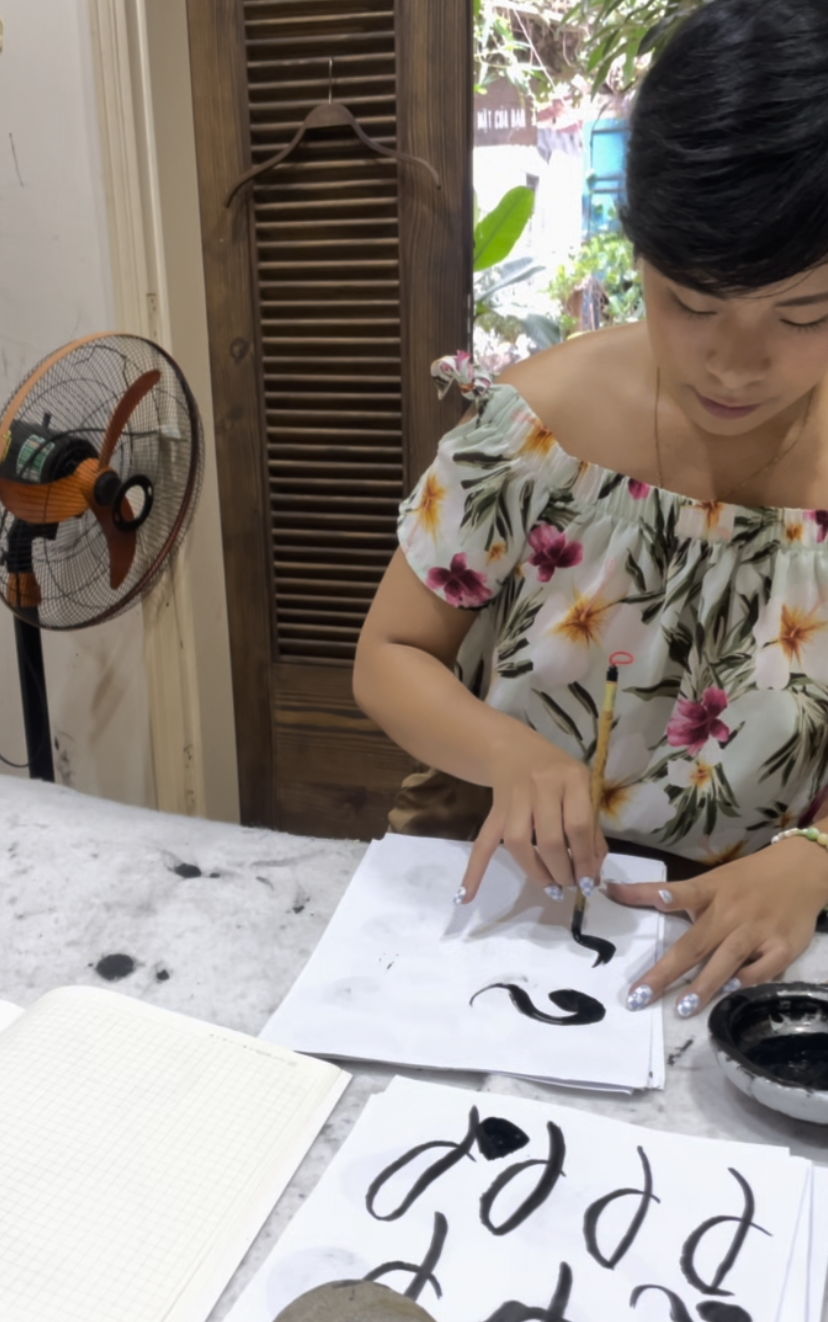
Me practicing basic calligraphy stroke in Việt Nam 2023
I remembered how shaky my hand was in the first few weeks of learning this art form.
Why This Art Still Matters Today
In a world of fast content, quick messages, and instant everything, Vietnamese calligraphy feels radical. It asks us to slow down. To choose a word carefully. To let intention lead.
Thư Pháp matters because:
It connects diasporic Vietnamese to our heritage
It preserves an ancient art form that almost disappeared
It bridges generations — from our grandparents to young kids seeing their names written beautifully for the first time
It transforms language into a ritual of care
It brings community together during Tết and other celebrations
It reminds us of who we are
As more people rediscover this art, a modern revival is happening — one scroll, one brushstroke, one blessing at a time.
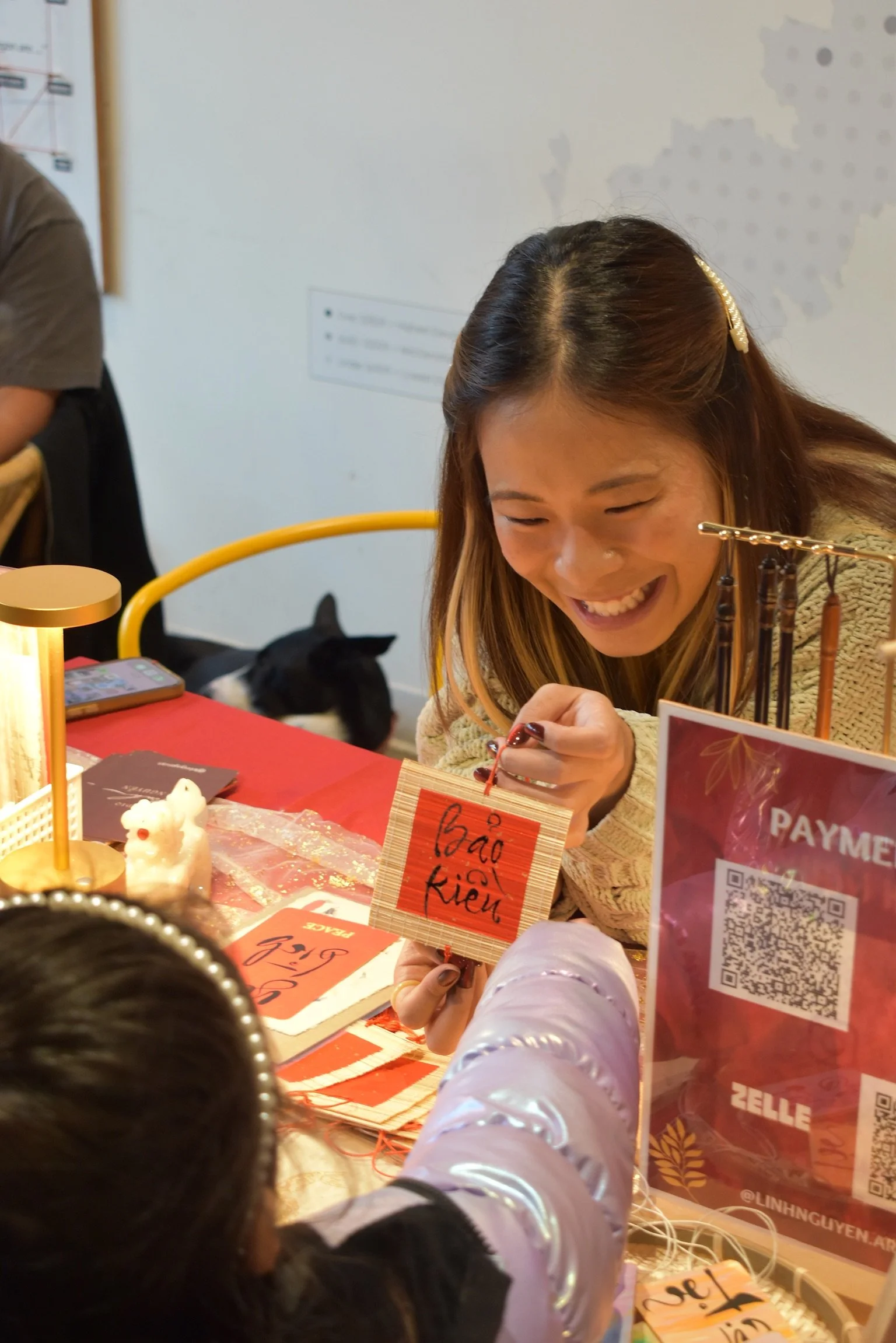
Vietnamese Calligraphy pop-up at Hello Em Coffee in Seattle, WA
How You Can Incorporate Thư Pháp Into Your Home & Celebrations
If you feel drawn to Vietnamese calligraphy, here are simple ways to bring it into your life:
1. Display a blessing in your home
Choose a word that holds meaning for your season of life — peace, compassion, abundance, grounding, or love.
2. Use calligraphy in weddings or tea ceremonies
Scrolls bring elegance, culture, and emotional depth to Vietnamese celebrations.
3. Gift a scroll to loved ones
A hand-written blessing is one of the most intimate and thoughtful gifts you can give.
4. Celebrate Tết with intention
Hang a red-and-gold scroll, wear áo dài, share blessings with family.
5. Start your own calligraphy journey
Even learning a few strokes can reconnect you with your roots.
